
Life Brand-New: Overcoming Pride
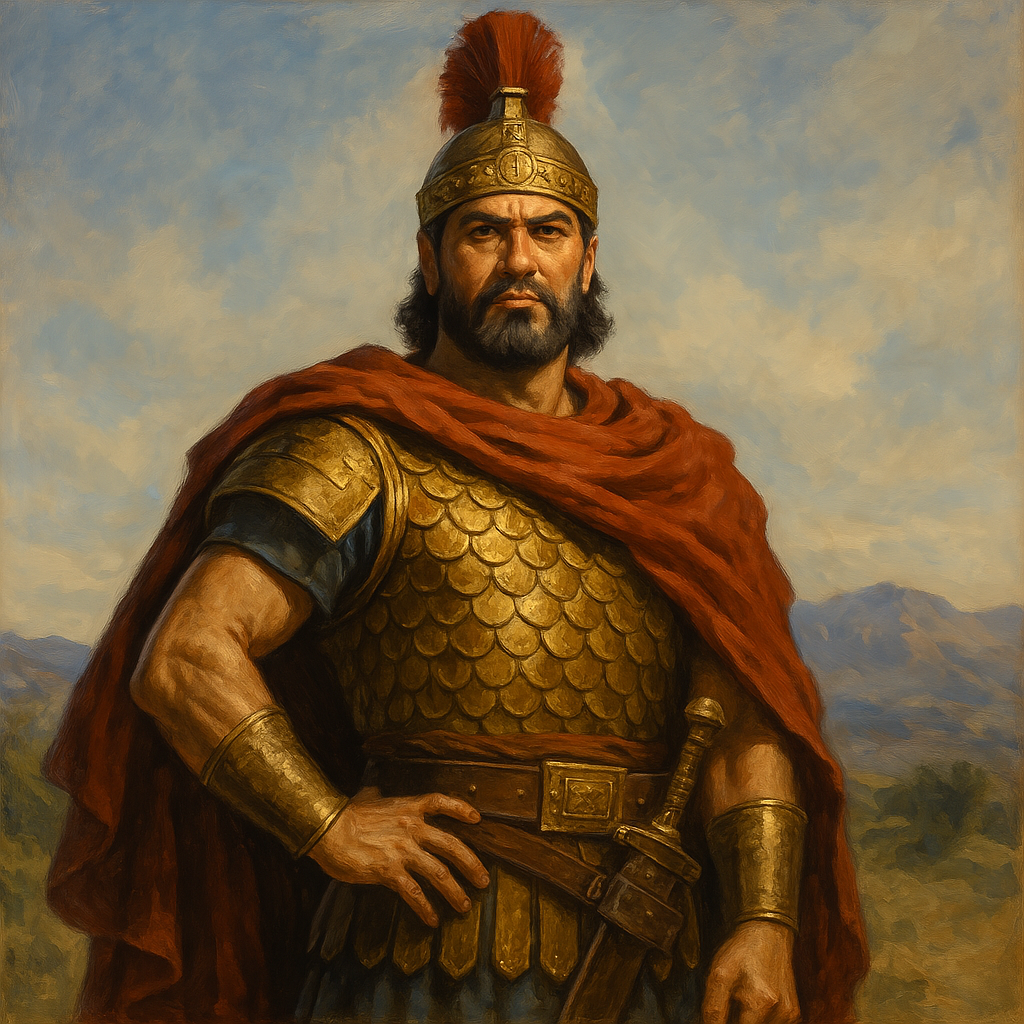 Naaman was a man of victories.
Commander of the army of Syria, he had the respect of kings and the admiration of soldiers.
Battle-hardened, strategic, and courageous—he was everything a warrior should be. But under the armor, hidden beneath layers of reputation and robes of honor,
Naaman carried a secret shame: leprosy. A disease that slowly claimed the body, and with it, dignity.
Naaman was a man of victories.
Commander of the army of Syria, he had the respect of kings and the admiration of soldiers.
Battle-hardened, strategic, and courageous—he was everything a warrior should be. But under the armor, hidden beneath layers of reputation and robes of honor,
Naaman carried a secret shame: leprosy. A disease that slowly claimed the body, and with it, dignity.
No rank could protect him from its touch. No triumph in war could silence the creeping dread of his condition. He was celebrated on the outside, but afflicted within. And in this, Naaman was not so different from the rest of us. How often do we hide our wounds behind medals and masks?
A Servant Girl’s Bold Hope
Hope came from an unlikely place. In Naaman’s household was a young Israelite girl, taken captive during a Syrian raid. A slave. Yet even in exile, her faith in God remained unshaken. One day, perhaps seeing the sorrow etched in Naaman’s eyes, she spoke:
"Would God my lord were with the prophet that is in Samaria! for he would recover him of his leprosy."
One small voice. One brave statement. And it stirred something in Naaman—a flicker of possibility. Desperate for healing, he acted. Letters were written. Treasures were gathered. Horses and chariots were summoned. The commander was on a mission—not for war this time, but for healing.
A Humbling Encounter
Arriving in Israel, Naaman expected doors to fly open and trumpets to sound. But the prophet Elisha didn’t even come outside. He simply sent a servant with a message:
"Go and wash in Jordan seven times, and thy flesh shall come again to thee, and thou shalt be clean."
Naaman was outraged. This? After all his effort? No ceremony? No incantations or dramatic gestures?
" Behold, I thought... " he fumed. " Are not Abana and Pharpar, rivers of Damascus, better than all the waters of Israel? " Pride bristled. The mighty commander felt insulted by such a lowly instruction. It seemed too simple. Too small.
The Turning Point
But then came the quiet wisdom of his servants.
"My father, if the prophet had bid thee do some great thing, wouldest thou not have done it? how much rather then, when he saith to thee, Wash, and be clean?"
It was a moment of decision. Swallow pride, or walk away unhealed. Naaman paused... and chose humility.
Seven Times in the Jordan
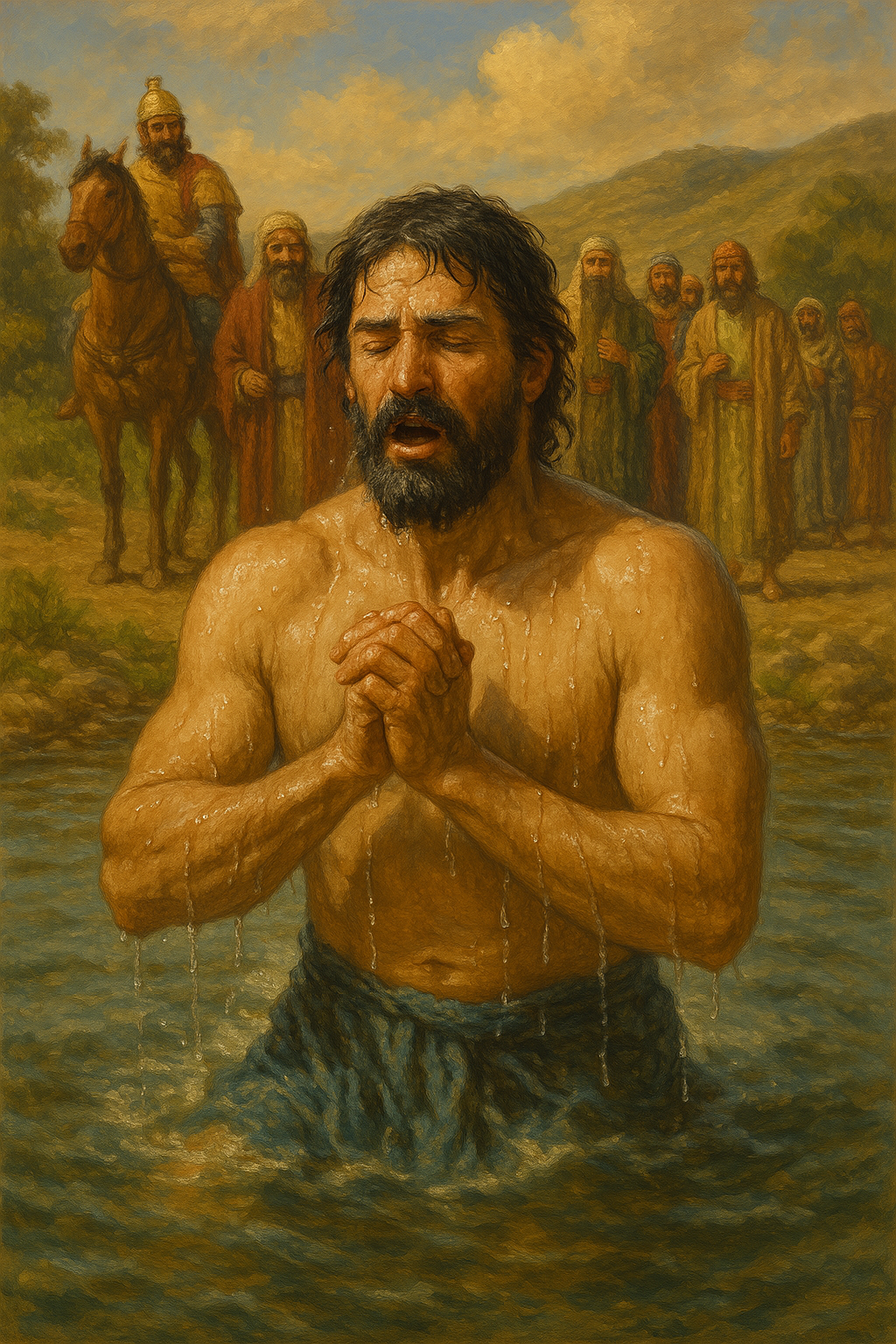
Down into the muddy waters of the Jordan he went. Once. Twice. Three times. Still leprous. Four... five... six... nothing changed. And then—seventh time—he emerged.
His skin was restored like that of a child. But more than that, his heart had changed. The God of Israel wasn’t just a healer—He was real. He was Lord.
Naaman returned to Elisha and declared with awe, "Behold, now I know that there is no God in all the earth, but in Israel."
A New Man
Naaman came seeking physical healing, but he left with something far greater: a new heart. He had come as a leper, proud and powerful, and he went away cleansed—body and soul. His faith had been born in the waters of humility, and from those waters, he rose a new man.
What Can We Learn from Naaman?
The story of Naaman is not just about skin disease. It’s about the disease of the soul—pride, self-reliance, and resistance to God’s way. Healing begins when we humble ourselves, listen to the voices God places in our lives, and obey—even when the instructions seem small or strange.
Like Naaman, we may come to God expecting dramatic solutions. But sometimes, our healing starts with something as simple as obedience, a soft heart, and faith in the power of His Word. What seems beneath us may actually be the very path to our restoration.
Scripture References
- 2 Kings 5:1–15 — Naaman’s story of healing and faith
- Proverbs 3:5–7 — “Trust in the Lord with all thine heart...”
- James 4:6–10 — “God resisteth the proud, but giveth grace unto the humble.”
- Isaiah 55:8–9 — “My thoughts are not your thoughts, neither are your ways my ways...”
- John 13:12–17 — Jesus teaches humility by washing His disciples’ feet